
Supply line replacement
Repiping for Older Homes
When the water pipes in your house keep leaking, rusting or losing pressure, patching stops making sense. Repiping replaces the supply system with new pipe, planned around your walls and your schedule.
01Pipes & water lines
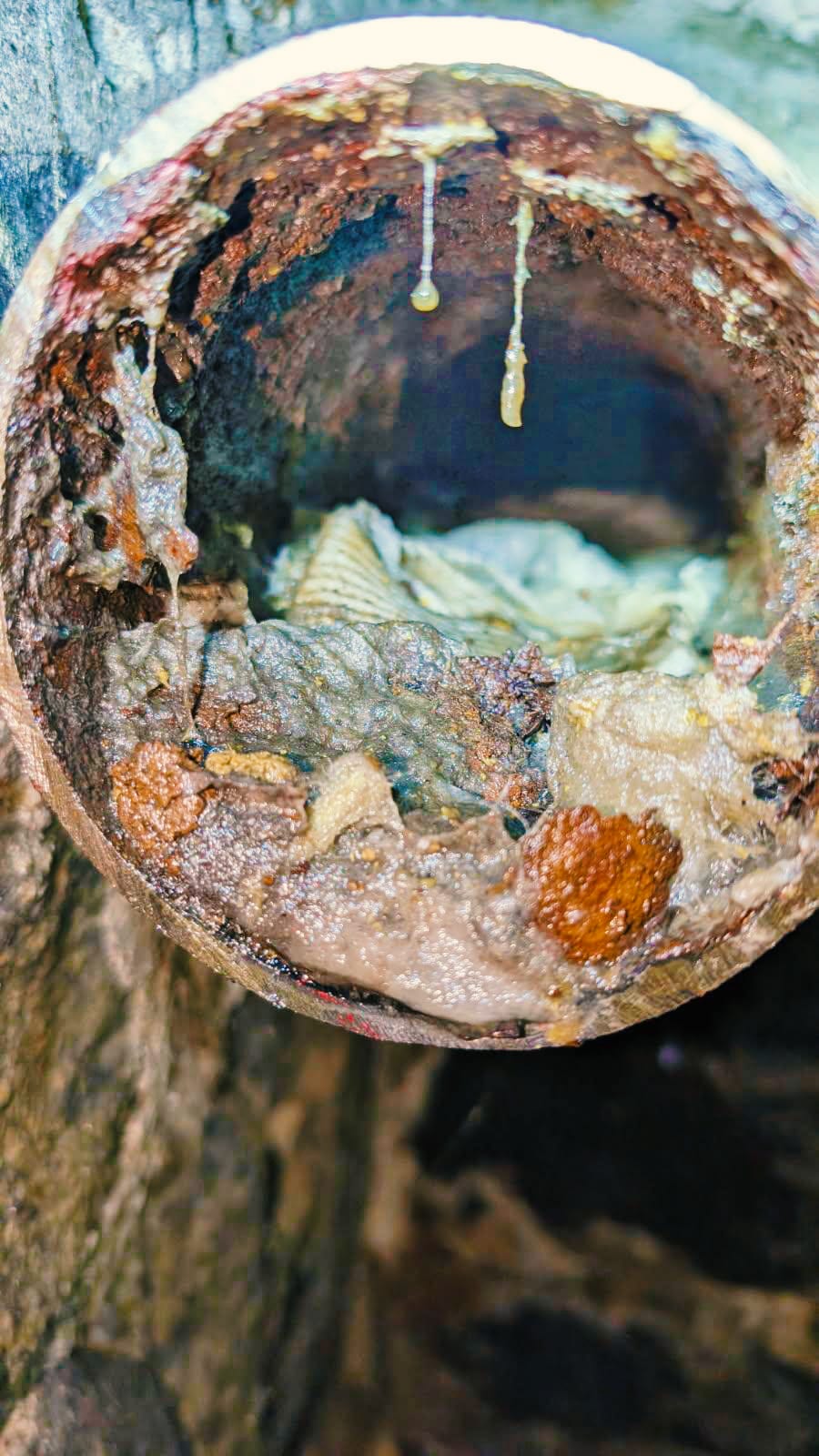
Many older homes still have galvanized steel water pipes. Over decades, the inside rusts and scale builds up until the pipe is a fraction of its original size. The result is low pressure, rusty water and leaks at threaded joints. Polybutylene, a gray plastic pipe used in some homes for a period, is also known for failing. Even copper can wear out, developing pinhole leaks in certain water conditions.
Repiping replaces the water supply lines from the main shutoff to the fixtures. Copper, PEX and CPVC each have tradeoffs. Copper is durable and long proven. PEX is flexible, needs fewer fittings and can be snaked through walls with smaller openings. CPVC is rigid plastic and less common in new work. We talk through which fits your house and budget.
A good repipe is mostly planning. We map where the pipes run, plan the routes and access openings to keep wall and ceiling cuts to a minimum, and schedule the work so your water is off as little as possible. Partial repipes, like replacing a single run or one bathroom group, are often an option too.
02When to call
Signs it's time
- 01Frequent leaks that need repeated repairs
- 02Low water pressure throughout the house
- 03Rusty or discolored water, especially first thing in the morning
- 04Visible rust or corrosion on exposed pipe
- 05Galvanized steel or polybutylene supply pipe
- 06Planning a major renovation with walls already open
03How we handle it
- 1
Assess the system
We identify the pipe materials, check pressure and look at exposed pipe to decide between targeted repairs and a full or partial repipe.
- 2
Plan routes and materials
We choose the pipe material with you and plan the routes and openings that disturb the least.
- 3
Install new lines
We install the new supply system sized correctly for your fixtures, with shutoffs where they belong, and remove or abandon the old pipe.
- 4
Test and review
Every new line is pressure tested before walls are closed. We walk you through the new system and where everything is.
04What's included
The scope, in plain terms
- Whole-house repiping
- Partial repipes for one area or fixture group
- Galvanized steel and polybutylene replacement
- Copper, PEX and CPVC installation
- New fixture shutoff valves
- Main shutoff valve replacement
- Planned access to limit wall and ceiling openings
- Pressure testing before close-up
05Questions
What people ask about repiping
Copper or PEX?
Both are good choices. Copper has a long track record and handles heat and sunlight well. PEX is flexible, uses fewer joints and usually needs fewer wall openings to install. The right answer depends on your house and how the pipes need to run.
Will you have to open my walls?
Some openings are usually needed, but planning keeps them small and few. Repiping while walls are already open for a renovation is the easiest time to do it.
Can I repipe in stages?
Often, yes. We can prioritize the worst runs first and replace the rest later. The tradeoff is that old and new pipe coexist for a while, and the old sections can keep causing trouble.
Does repiping include drain lines?
Repiping usually refers to the water supply lines. Old cast iron or galvanized drains can be replaced too, but that is a separate scope we would assess on its own.
Repiping in these towns
- Bloomfield
- Boonton
- Caldwell
- Cedar Grove
- Clifton
- Fairfield
- Franklin Lakes
- Hackensack
- Lincoln Park
- Little Falls
- Livingston
- Madison
- Midland Park
- Montclair
- Montville
- Morristown
- Mountain Lakes
- North Caldwell & West Caldwell
- Nutley
- Oakland
- Paramus
- Parsippany
- Pequannock
- Pompton Plains
- Ridgewood
- South Orange
- Totowa
- Wayne
- West Orange
- Wyckoff
Request service
Tell us what's going on.
We'll get back to you to set a time. Anything urgent, call instead: (973) 513-7751.