
No-trench repair
Trenchless Plumbing Repairs
Trenchless methods repair or replace buried pipe through small access points instead of a trench the full length of the yard. Your driveway, walkway and landscaping mostly stay where they are.
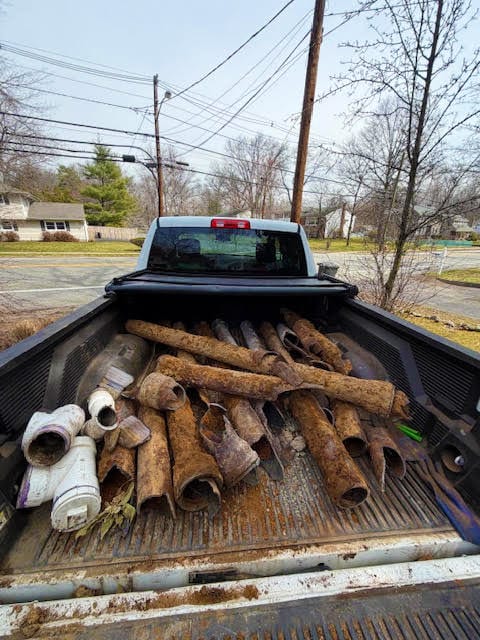
01Trenchless & excavation
Traditional replacement means digging a trench along the whole pipe, removing it, laying new pipe and backfilling. That works, but under a driveway, a patio, mature trees or a finished landscape, the restoration can cost as much effort as the plumbing.
Trenchless repair uses two main methods. Pipe bursting pulls a new pipe through the path of the old one, breaking the old pipe apart as it goes. Relining installs a new pipe inside the old one by curing a resin-soaked liner against the walls. Bursting gives you a completely new pipe. Lining keeps the old pipe as a host and seals it from the inside. Both need far less excavation than a trench.
Not every line qualifies. A pipe that has collapsed flat, has a deep sag, or runs next to other utilities may need a different approach. We decide after a camera inspection and locating, and we will tell you plainly if digging is the better option.
02When to call
Signs it's time
- 01A camera inspection showed a damaged sewer or water line
- 02The line runs under a driveway, patio or mature landscaping
- 03Roots keep returning through clay or cast iron joints
- 04Repeated backups from a pipe that is past cleaning
- 05An old water service line with leaks or low pressure
- 06You want to avoid a full-length trench
03How we handle it
- 1
Inspect and locate
A camera inspection shows the condition of the full line. Locating marks its path and depth so we can plan access points.
- 2
Pick the method
Bursting for pipe that is too damaged to line or needs to be upsized. Relining for pipe that holds its shape but leaks or lets roots in. Excavation if neither fits.
- 3
Do the work through small openings
We dig only the access pits the method needs, typically at each end of the run, and complete the replacement or lining between them.
- 4
Test and verify
We reconnect, test the line and run a camera through it to confirm the result.
04What's included
The scope, in plain terms
On the truck for this
- Trenchless pipe bursting
- Pipe relining
- Sewer camera inspection
- Pipe locating equipment
- High-pressure water jetting
- Trenchless sewer line repair and replacement
- Trenchless water line replacement
- Pipe bursting
- Pipe relining
- Camera inspection and locating to confirm eligibility
- Repairs under driveways, patios and landscaping
- Root intrusion repair without a full trench
- Post-repair testing and camera verification
Specific trenchless pipe repair services
05Questions
What people ask about trenchless pipe repair
Is trenchless really no-dig?
Not quite. Most jobs need one or two small access pits, often at the house and near the street end of the line. The difference is that we do not trench the whole length in between.
Bursting or relining, which is better?
They solve different problems. Bursting replaces the pipe completely and can handle pipe that is badly broken. Relining is less disruptive but needs a host pipe that still holds its shape. The camera inspection decides it.
Can trenchless fix a sagging pipe?
Usually not. A liner follows the existing pipe, sag included, and bursting tends to follow the old path. A belly that holds water is often better fixed by excavating and regrading that section.
Does trenchless work for water lines too?
Yes. Water service lines can often be replaced by pulling a new line through the old one's path. See our trenchless water line page for details.
Related work
Trenchless Pipe Repair in these towns
- Bloomfield
- Boonton
- Caldwell
- Cedar Grove
- Clifton
- Fairfield
- Franklin Lakes
- Hackensack
- Lincoln Park
- Little Falls
- Livingston
- Madison
- Midland Park
- Montclair
- Montville
- Morristown
- Mountain Lakes
- North Caldwell & West Caldwell
- Nutley
- Oakland
- Paramus
- Parsippany
- Pequannock
- Pompton Plains
- Ridgewood
- South Orange
- Totowa
- Wayne
- West Orange
- Wyckoff
Request service
Tell us what's going on.
We'll get back to you to set a time. Anything urgent, call instead: (973) 513-7751.