Sewer laterals
Sewer Line Installation and Repair
The sewer lateral runs from your foundation to the public sewer. When it cracks, sags or collapses, cleaning stops working. We repair the damaged section or replace the line, and we install new laterals for construction and additions.
01Sewer & drain
Your sewer lateral is usually buried several feet down between the house and the street. In older North Jersey homes, many laterals are clay pipe with joints every few feet, or cast iron. Clay joints let roots in. Cast iron corrodes and cracks. Shifting soil causes offset joints and sagging sections. Any of these can turn into repeated backups or a full collapse.
Repair starts with a camera inspection and locating, so we know exactly where the damage is, how deep, and what the rest of the line looks like. A single broken section near the house is a very different job from a line that is failing along its full length.
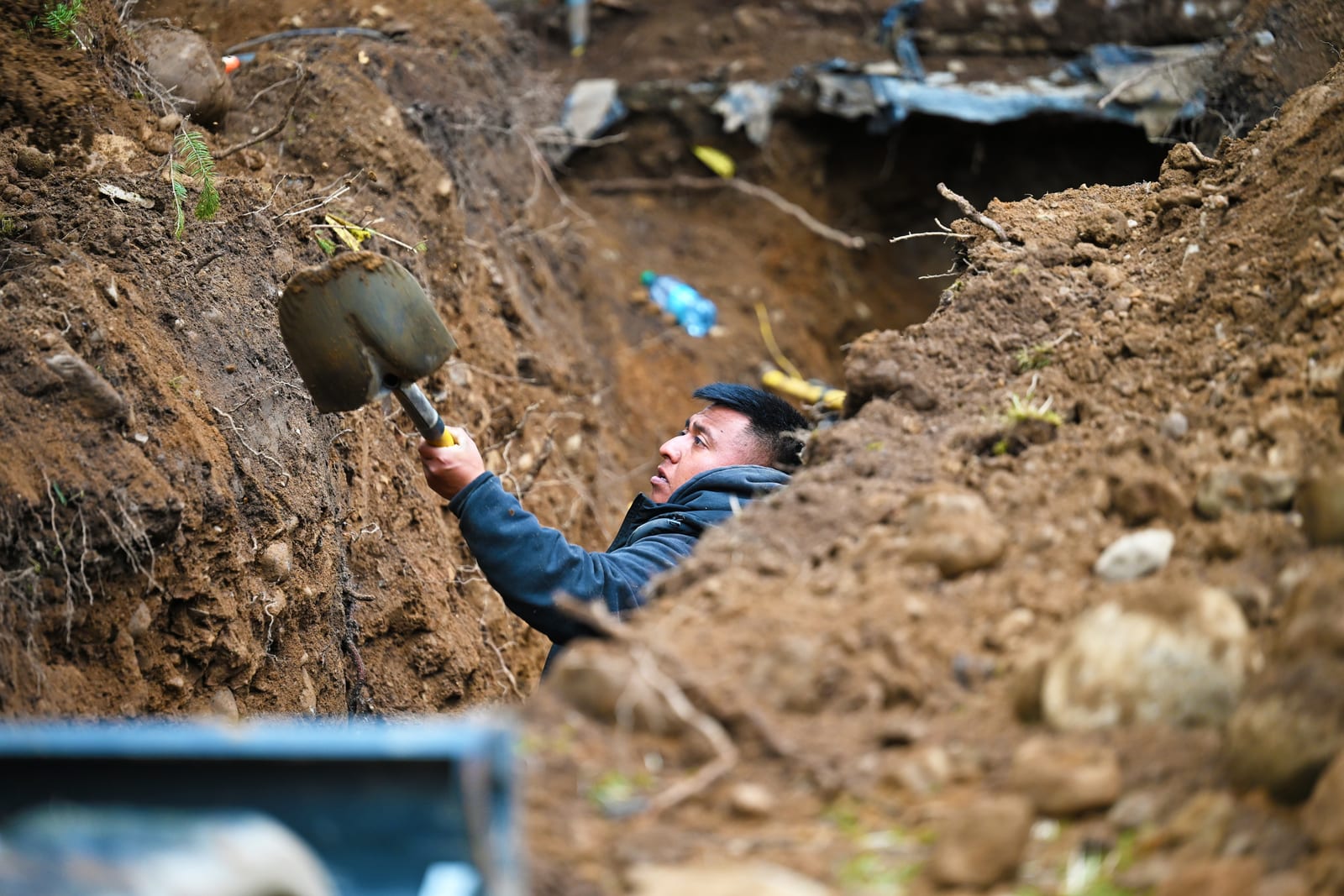
From there we choose the method. Open excavation still makes sense for short, shallow repairs or where the line needs to be regraded to fix a sag. Trenchless pipe bursting or lining can replace or rehabilitate a long run with far less digging. For new construction and additions, we install new sewer laterals with proper slope, cleanouts and connections, and coordinate with the required inspections.
02When to call
Signs it's time
- 01Backups that return soon after the line is cleaned
- 02A camera inspection showing breaks, offsets or a collapse
- 03Roots returning faster and heavier each time
- 04Sewage smell or soggy ground in the yard
- 05Sinkholes or depressions over the sewer line path
- 06A new house, addition or new bathroom that needs a sewer connection
03How we handle it
- 1
Inspect and locate
We run a camera from the cleanout and mark the line and each defect from above, with depth.
- 2
Choose the method
Spot excavation, full replacement, pipe bursting or lining, based on the damage, the depth, what is above the line and whether the slope needs fixing.
- 3
Do the work to code
We repair or install the line with the right pipe, slope and bedding, add or replace cleanouts as needed, and arrange the required inspections.
- 4
Verify with the camera
After the work, we flow test and run a camera through the line so you can see the finished result.
04What's included
The scope, in plain terms
On the truck for this
- Sewer camera inspection
- Pipe locating equipment
- Trenchless pipe bursting
- Pipe relining
- Camera diagnosis and line locating
- Spot repair of broken or separated sections
- Full sewer lateral replacement
- Repairs for root-damaged clay and corroded cast iron pipe
- Correcting sagging sections that hold water
- New sewer laterals for construction and additions
- Cleanout installation
- Trenchless options where the line qualifies
- Final flow test and camera verification
05Questions
What people ask about sewer line repair and installation
Do I need to replace the whole line?
Not always. If the camera shows one bad section and the rest is sound, a spot repair can be the right answer. If the line is failing in several places or the material is near the end of its life, full replacement is usually the better investment. We show you the footage so you can see why.
Dig or trenchless?
It depends on the damage, the depth, the soil and what is on top of the line. Trenchless works well for long runs under driveways and landscaping. Excavation is often better for short shallow repairs or for fixing a sag, since lining follows the existing slope.
Will I need a permit?
Sewer line replacement and new installations typically require a plumbing permit and inspection. We handle that process as part of the job.
Related work
Sewer Line Repair and Installation in these towns
- Bloomfield
- Boonton
- Caldwell
- Cedar Grove
- Clifton
- Fairfield
- Franklin Lakes
- Hackensack
- Lincoln Park
- Little Falls
- Livingston
- Madison
- Midland Park
- Montclair
- Montville
- Morristown
- Mountain Lakes
- North Caldwell & West Caldwell
- Nutley
- Oakland
- Paramus
- Parsippany
- Pequannock
- Pompton Plains
- Ridgewood
- South Orange
- Totowa
- Wayne
- West Orange
- Wyckoff
Request service
Tell us what's going on.
We'll get back to you to set a time. Anything urgent, call instead: (973) 513-7751.