
Water heaters
Water Heater Replacement and Installation
Replacing a water heater is a good moment to fix what the old install got wrong and size the new unit for how your household actually uses hot water.
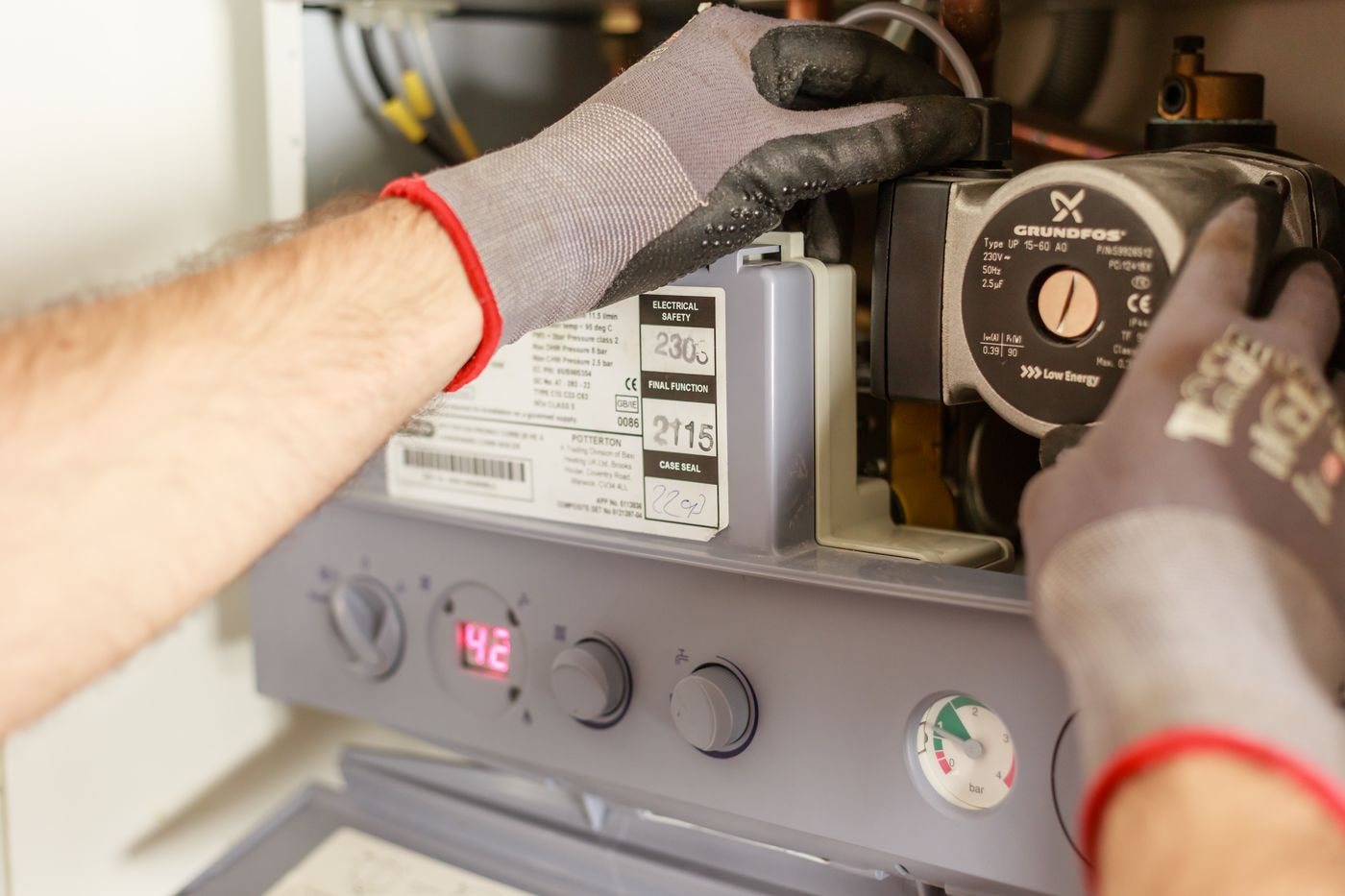
01Water heaters
A like-for-like swap is often the right call, but not always. Before we recommend a unit, we look at how many people use hot water, how many bathrooms you have, and whether the old heater kept up. The choice includes tank size, recovery rate, fuel type, and whether a tankless or heat pump unit fits better.
The installation details decide how long a water heater lasts and how safely it runs. That includes a properly sized gas line, a vent that drafts, a relief valve with a correct discharge line, working shutoff valves, and in many homes a thermal expansion tank where the water supply is a closed system.
We remove the old unit, install the new one, and test it before we leave. Commercial buildings and multifamily properties get the same approach, scaled to their demand.
02When to call
Signs it's time
- 01Water leaking from the tank body or base
- 02The unit is older and repairs keep adding up
- 03Rusty hot water that persists after flushing
- 04Your household outgrew the current tank
- 05You want a more efficient unit or a different system type
- 06A home inspection flagged the water heater or its venting
03How we handle it
- 1
Choose the right unit
We size the replacement to your demand and fuel, and explain the trade-offs between tank, high recovery, tankless and heat pump options.
- 2
Remove the old heater
We shut off water and fuel, drain the tank and take the old unit out.
- 3
Install correctly
The new heater is set, piped with shutoffs, connected to gas or power, vented, and fitted with a relief valve and proper discharge line.
- 4
Test everything
We leak test water and gas connections, check draft on fuel-fired units, run a heating cycle and confirm temperature at a fixture.
04What's included
The scope, in plain terms
- Sizing and system type recommendation
- Removal of the old water heater
- Electric, gas and propane tank installation
- Tankless and heat pump water heater installation
- Venting, gas and electrical connection setup
- Relief valve, discharge line and shutoff valves
- Thermal expansion tank where the system needs one
- Leak, draft and performance testing
05Questions
What people ask about water heater replacement
Should I get the same size tank again?
Only if the old one met your needs. If you were running out of hot water, a larger tank, a high recovery unit or a tankless system may fit better. We look at demand before recommending a size.
What is a heat pump water heater?
It is an electric unit that moves heat from the surrounding air into the water instead of making heat with elements alone. It uses less electricity than a standard electric tank but needs enough space and air around it, and it cools the room it sits in.
Do I need an expansion tank?
If your water supply has a check valve or pressure reducing valve, heated water has nowhere to expand, and pressure rises in the system. An expansion tank absorbs that. We check whether your system needs one.
Related work
Water Heater Replacement in these towns
- Bloomfield
- Boonton
- Caldwell
- Cedar Grove
- Clifton
- Fairfield
- Franklin Lakes
- Hackensack
- Lincoln Park
- Little Falls
- Livingston
- Madison
- Midland Park
- Montclair
- Montville
- Morristown
- Mountain Lakes
- North Caldwell & West Caldwell
- Nutley
- Oakland
- Paramus
- Parsippany
- Pequannock
- Pompton Plains
- Ridgewood
- South Orange
- Totowa
- Wayne
- West Orange
- Wyckoff
Request service
Tell us what's going on.
We'll get back to you to set a time. Anything urgent, call instead: (973) 513-7751.