Water heaters
Water Heater Repair in Fairfield and North Jersey
No hot water, rusty water, or a puddle under the tank. We find out which part failed and tell you plainly whether a repair makes sense.
This is often an after-hours callWater backing up or rising right now? Call (973) 513-7751, day or night.
01Water heaters
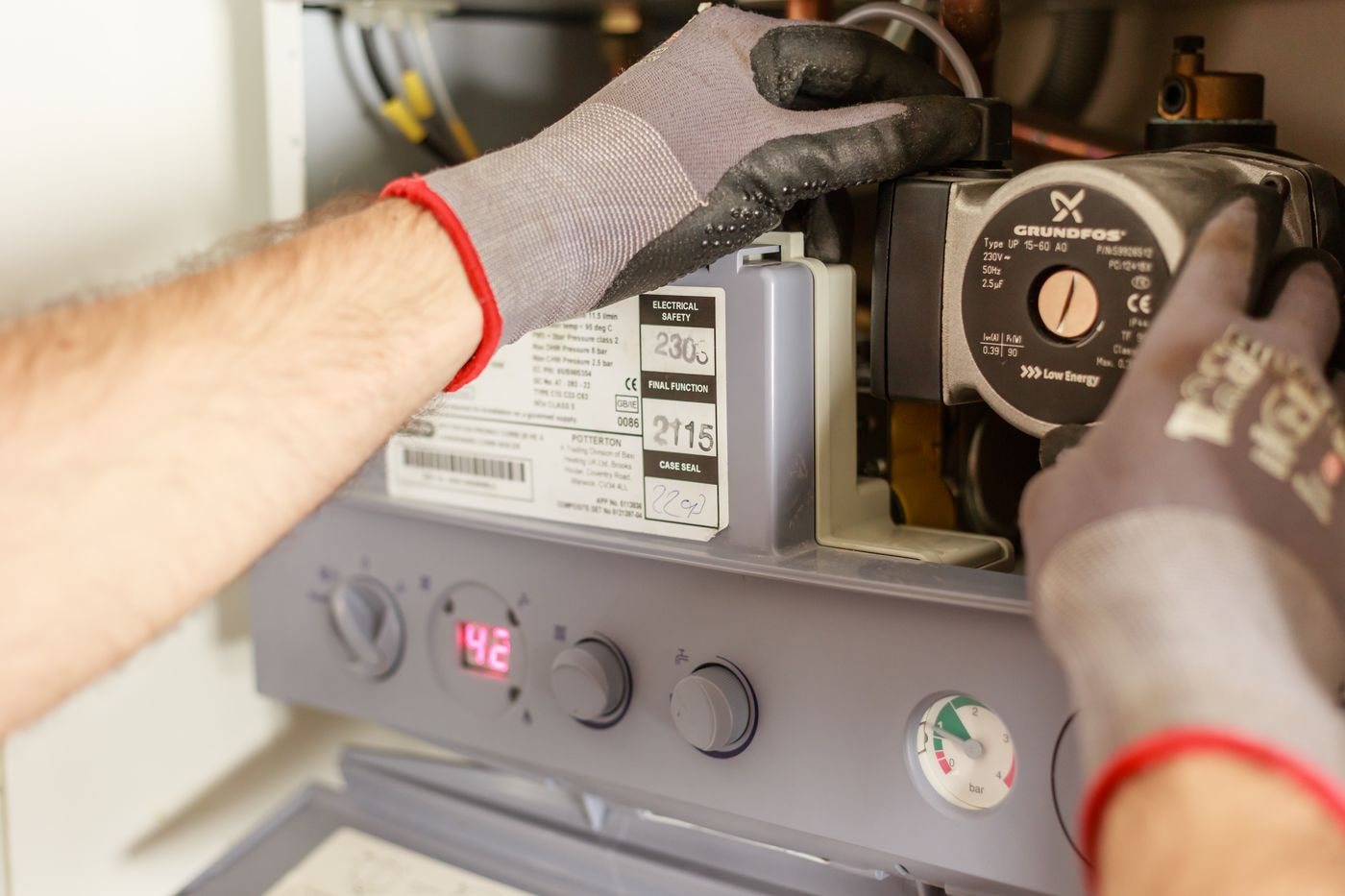
A tank water heater is a simple machine with a few parts that wear out. Gas units rely on a thermocouple or flame sensor, a gas control valve, a burner and a flue. Electric units use two heating elements and two thermostats. Both have a temperature and pressure relief valve, a dip tube and a sacrificial anode rod that corrodes so the steel tank does not. Most no-heat calls come down to one of those parts.
The tank itself is the one thing that cannot be repaired. Once the steel inside has rusted through, water seeps from the bottom or the seams and the only fix is replacement. Part of every repair visit is checking for early signs of that so you are not paying to fix a unit that is about to leak.
We service gas, propane, electric, high recovery and tankless units in homes and commercial buildings across North Jersey, with 24/7 emergency service when a heater fails at a bad time.
02When to call
Signs it's time
- 01No hot water at all, or hot water that runs out much faster than it used to
- 02Rumbling, popping or cracking sounds while the burner or elements are running
- 03Rusty or brown hot water, or a rotten egg smell from the hot side only
- 04Water pooling around the base of the tank or dripping from the relief valve line
- 05A pilot light that will not stay lit or a burner that keeps shutting off
- 06Water that swings between too hot and lukewarm
03How we handle it
- 1
Confirm the basics
We check power or gas supply, the pilot or ignition, the thermostat settings and the venting before touching anything else. Some no-heat calls end here.
- 2
Test the components
Elements and thermostats are tested with a meter. On gas units we check the flame sensor or thermocouple, the control valve and the draft at the flue.
- 3
Inspect the tank and valves
We look for corrosion at the fittings and base, check the relief valve, and ask about the age of the unit. That tells us whether repair money is well spent.
- 4
Repair or recommend
If a part fixes it, we replace the part and test a full heating cycle. If the tank is failing, we explain replacement options instead of patching it.
04What's included
The scope, in plain terms
- Diagnosis of no-heat, low-heat and temperature swing problems
- Heating element and thermostat replacement on electric units
- Thermocouple, flame sensor, gas valve and igniter service on gas and propane units
- Temperature and pressure relief valve testing and replacement
- Leak tracing at fittings, valves and the tank
- Flushing to clear sediment where the tank is a good candidate
- Tankless unit troubleshooting, including error codes and scale buildup
- Repair versus replacement advice based on what we actually find
Specific water heater repair services
05Questions
What people ask about water heater repair
Should I repair or replace my water heater?
It depends on the age of the unit and what failed. A bad element, thermostat or thermocouple on a tank that is not leaking is usually worth repairing. A tank that is leaking from the body cannot be repaired. We look at both before recommending either.
My relief valve is dripping. Is that dangerous?
The relief valve opens when temperature or pressure in the tank gets too high, so a drip means something needs attention. It can be a worn valve or a real pressure problem, such as thermal expansion on a closed system. Do not cap or plug the discharge line. Have it checked.
Why does my hot water smell like rotten eggs?
That smell usually comes from a reaction between bacteria in the water and the anode rod inside the tank. It is common with some water supplies. A different anode rod and a flush often help. If you smell gas near a gas water heater, that is different: leave the building and call your gas utility or 911 from outside.
Do you work on tankless water heaters?
Yes. Tankless units have their own failure points, such as scale on the heat exchanger, clogged inlet screens and venting faults. We troubleshoot them and descale them where that is the fix.
Related work
Water Heater Repair in these towns
- Bloomfield
- Boonton
- Caldwell
- Cedar Grove
- Clifton
- Fairfield
- Franklin Lakes
- Hackensack
- Lincoln Park
- Little Falls
- Livingston
- Madison
- Midland Park
- Montclair
- Montville
- Morristown
- Mountain Lakes
- North Caldwell & West Caldwell
- Nutley
- Oakland
- Paramus
- Parsippany
- Pequannock
- Pompton Plains
- Ridgewood
- South Orange
- Totowa
- Wayne
- West Orange
- Wyckoff
Request service
Tell us what's going on.
We'll get back to you to set a time. Anything urgent, call instead: (973) 513-7751.