Water heaters
High Recovery Water Heaters for Busy Homes
If your household runs out of hot water every morning, a bigger tank is not the only answer. A unit that reheats faster may fit better.
01Water heaters
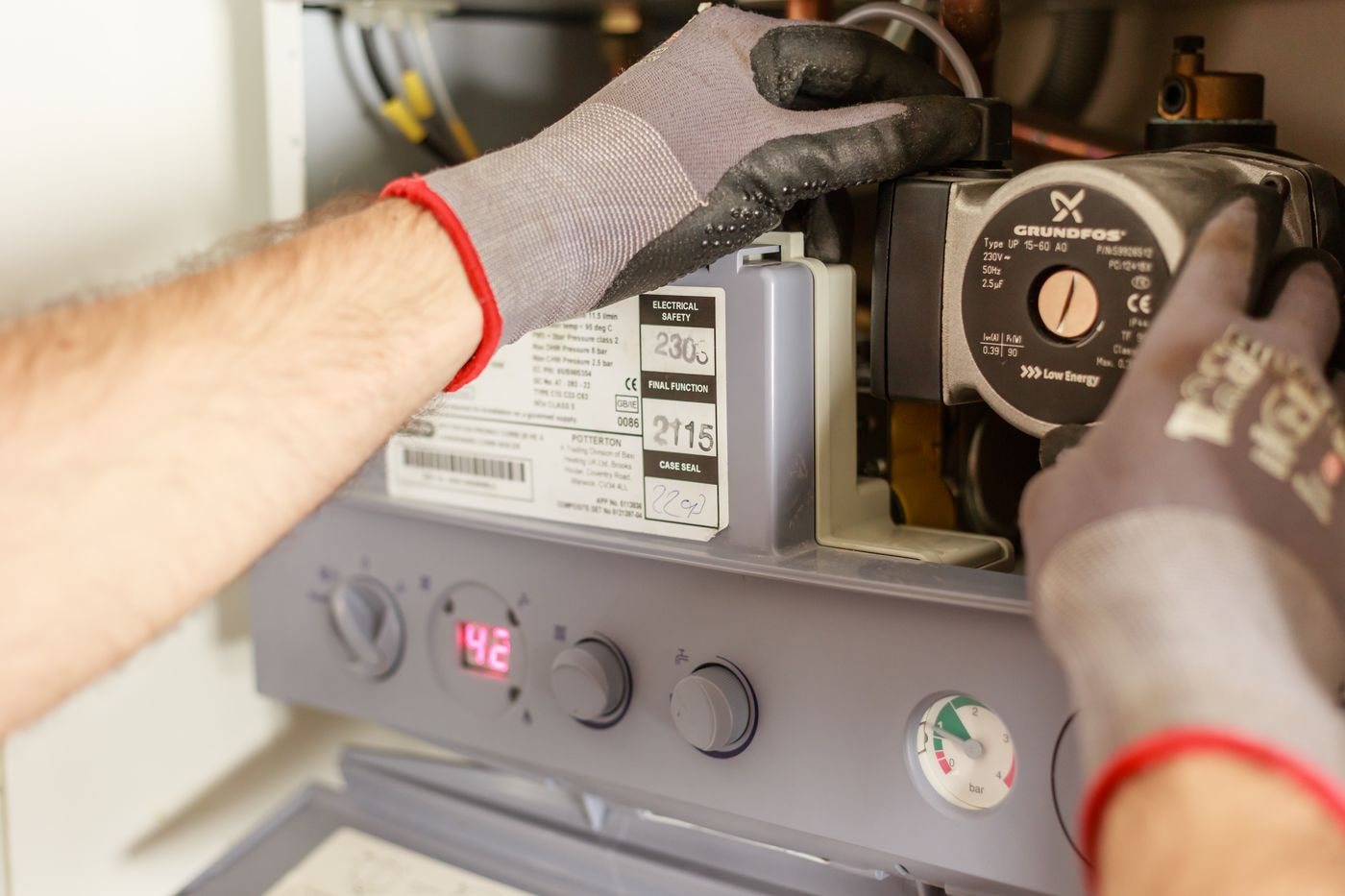
Two numbers matter when a tank water heater runs out. Tank size is how much hot water is stored. Recovery rate is how many gallons the heater can bring back up to temperature in an hour. A high recovery unit uses a larger burner or more powerful heating to raise that second number, so the tank refills with hot water faster between showers, laundry and dishes.
That makes high recovery models a good fit for larger families, homes with big soaking tubs or multiple showers running at once, and small commercial spaces with steady demand. They are usually gas fired, though some electric models are built for faster recovery too.
A faster burner needs gas piping, venting and combustion air that can support it. We check all three before recommending one, because an undersized gas line or vent can keep a high recovery unit from performing as rated.
02When to call
Signs it's time
- 01Hot water runs out partway through the second or third shower
- 02You wait a long time for hot water to come back after laundry or dishes
- 03Your household has grown or you added a bathroom
- 04You are replacing a standard tank and want better performance in the same footprint
- 05A small business or multifamily building has steady hot water demand through the day
03How we handle it
- 1
Measure your demand
We ask how many people, bathrooms and fixtures draw hot water at your busiest hour, and what your current unit is rated for.
- 2
Check gas, venting and space
We look at the gas line size, the existing flue and the clearances around the heater location to confirm a higher input unit can be installed safely.
- 3
Install and connect
The old unit is drained and removed. The new one is set, piped, vented and connected to gas or power, with a working relief valve and discharge line.
- 4
Test under load
We fire the unit, check for leaks and proper draft, and confirm it heats as expected.
04What's included
The scope, in plain terms
- Hot water demand and sizing evaluation
- Comparison of recovery rate and tank size options
- Gas line and venting verification for higher input units
- Removal of the existing water heater
- Installation, piping and relief valve setup
- Leak, draft and performance testing
- Service and repair of existing high recovery units
05Questions
What people ask about high recovery water heaters
Is a high recovery water heater better than a bigger tank?
It depends on how your hot water use is spread out. A bigger tank helps when demand comes all at once. Faster recovery helps when demand comes in waves through the morning or evening. Often the right answer is a mix of both, and space limits matter too.
Should I go tankless instead?
Tankless units never run out, but they are limited by flow rate, so several fixtures at once can exceed what one unit delivers. A high recovery tank can be simpler where the gas line and venting are already close to adequate. We can walk through both.
Will my existing gas line work?
Sometimes. A higher input burner needs more gas, and an undersized line can starve it or other appliances. We check the line before installing.
Related work
High Recovery Water Heaters in these towns
- Bloomfield
- Boonton
- Caldwell
- Cedar Grove
- Clifton
- Fairfield
- Franklin Lakes
- Hackensack
- Lincoln Park
- Little Falls
- Livingston
- Madison
- Midland Park
- Montclair
- Montville
- Morristown
- Mountain Lakes
- North Caldwell & West Caldwell
- Nutley
- Oakland
- Paramus
- Parsippany
- Pequannock
- Pompton Plains
- Ridgewood
- South Orange
- Totowa
- Wayne
- West Orange
- Wyckoff
Request service
Tell us what's going on.
We'll get back to you to set a time. Anything urgent, call instead: (973) 513-7751.